
Objections must be lodged by 11 May 2026 for Land Valuations released in Queensland in March 2026.
The following will assist in the preparation of a “properly made” objection by comparing your New Value (from recent land valuation notice) with an estimate of your site valuation based on recent sales in your area. If your estimated site valuation is a different value than the one on your recent land valuation notice, you have grounds for a “properly made” objection. The information below will guide you on how to lodge a land valuation objection with the Queensland Government.
Your land valuation should reflect the site valuation of your land, ie. the unimproved value of your land. When land valuations are made, a mass valuation process is used to apply changes due to recent sales to all land valuations in a given area. This does not always give reliable results, which is why there is an objection process and why there are legitimate grounds for an objection. We will take you through how to estimate the site valuation of your land, using this formula:
site valuation [C] = value of your property [A] – value of improvements [B]
1. Estimate the value of your property
Search websites such as onthehouse.com.au or property.com.au/sold to find recent sales of properties similar to yours. Make a list of properties in your area including the following information:
- sale date
- address
- land area
- sale price
- additional features such as a swimming pool or view
Now estimate the value of your property [A] by comparing the attributes of these properties with yours. The estimated value of your property would be what you would expect to sell it for if you were to put it up for sale.
2. Estimate the value of the improvements
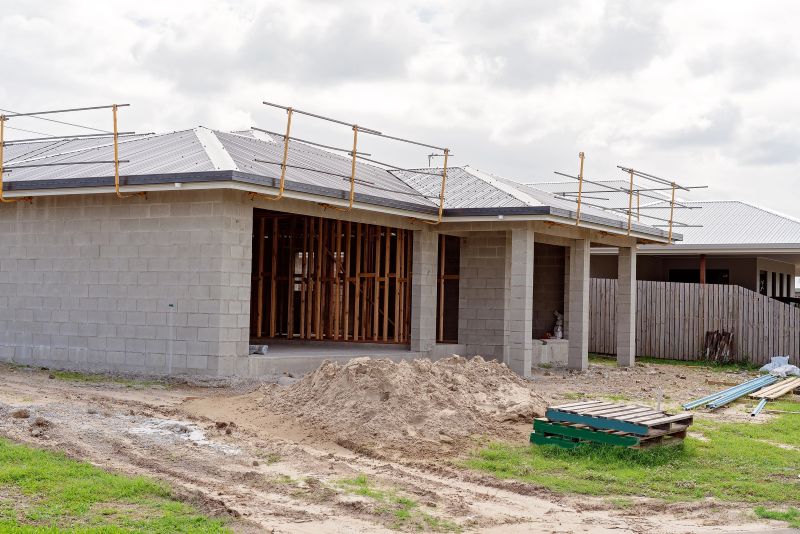
The next step is to make an estimate of the current value of the improvements [B] to your property. This includes your house and any other built structures, such as sheds, retaining walls, fences, driveways, pools, etc. The Sum Sure website is useful for calculating the replacement value of your house, ie. if you had to rebuild. You will also need to determine the value of any other improvements not included in the house value (eg. driveway, fences, swimming pool, etc).
Depending on the condition of your improvements (house, fences, driveways, etc) you may need to make a deduction from the replacement value in order to get a fair estimate of the current value of improvements [B].
If you have a view from your house, but not from your land, the value of the view should be included in the improvements. The ‘value’ of a view may be determined by comparing the new values of properties in your area with and without a view. New values can be found on the Find your land valuation website.
3. Consider other factors
You may need to check for additional information that hightlights other factors that could affect your site valuation. This could include things such as:
- contours highlighting steep gradients which impact on the useability of the land
- hazard overlays – flood maps, storm surge/tide maps, aircraft zones, etc.
- planning zones, building envelopes, wildlife protection zones, etc.
In the Redlands City council area, Red-E-map is a good tool for checking other aspects of your property that may affect your land valuation, such as contours, zones, hazard overlays, etc. The Queensland Government DAMS (Development Assessment Mapping System) tool, and SPP (State Planning Policy) tool may be useful for other council areas.
4. Estimate the site valuation of your land
You now have the estimates required to calculate what you believe the site valuation of your land should be:
- [A] = the estimated value of your property
- [B] = the estimated value of improvements
Now you can use the following formula to calculate the estimated site (unimproved) valuation of your land [C].
site valuation [C] = value of your property [A] – value of improvements [B]
Now compare your estimated site valuation with the New Value. You can get the new value from your Land Valuation Notice or the Find your land valuation website. If there is a significant difference you should lodge an objection on Form 58S.
4. Complete Form 58S
Section 1 – complete this section with details from your Land Valuation Notice.
Section 2 – your personal details
Section 3 – your estimate of what your site valuation [C] should be.
Section 4 – here is where you list all the grounds upon which you are objecting.
- Ground 1 – tick ‘Yes, applicable’ and state the 2 (or more) property sales that most closely support your objection and explain the reasons why they support it (see instructions on the form). Attach a separate sheet if necessary.
- Check the other grounds for objecting to see if these may also apply. There are often cases where physical changes between adjacent blocks are not adequately considered or modelled by the mass valuation process. Examples include abrupt changes in topography, properties along boundaries between valuation areas (suburbs), bay views that cannot be seen from standing on the land (they are attributes of improvements), etc. The valuation of neighbouring properties can be found on Find your land valuation.
Section 5 – only needs to be completed if someone is acting on your behalf to complete the objection.
Section 6 – declaration to be signed and use the checklist to make sure your objection has been completed correctly.
Note that objections must be lodged by 11 May 2026 for Land Valuations released in Queensland in March 2026.