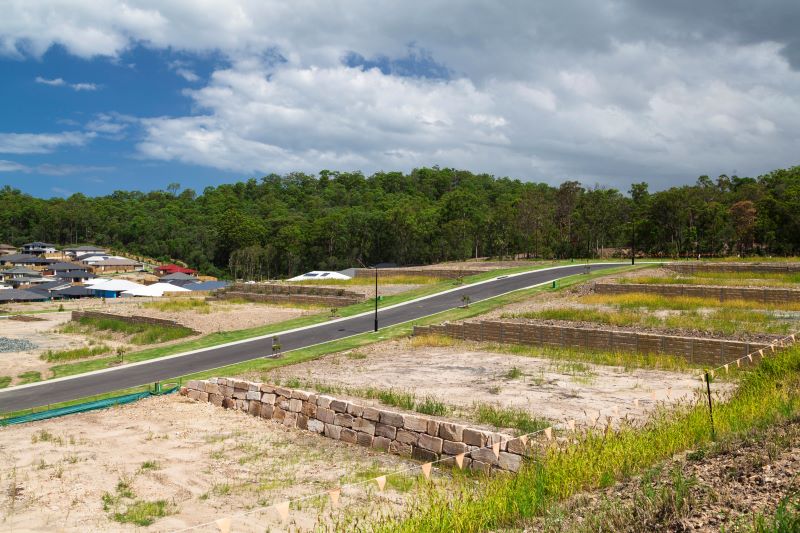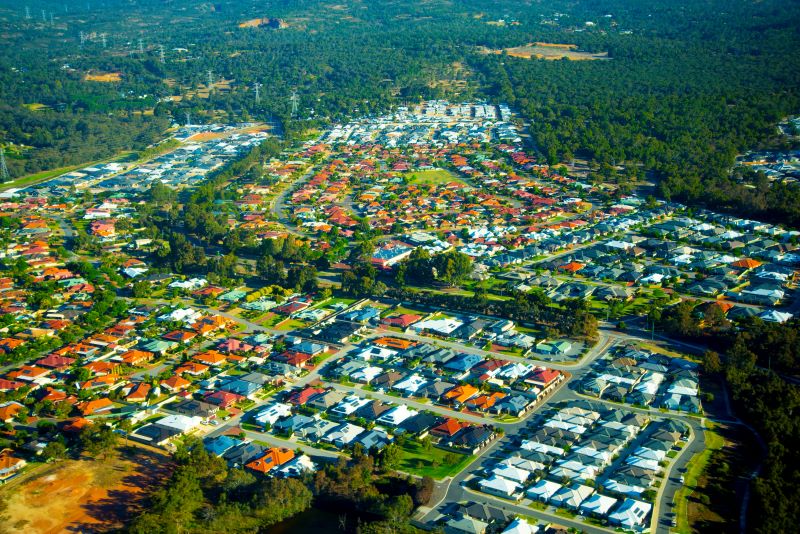
If you believe there is a housing affordability crisis in Australia, objecting to your State Government land valuation is one way you can take action. Your Annual Land Valuation Notice outlines the process for objecting and here, we provide a summary of the grounds on which you can object. An example land valuation objection is also included at the end of this article.
- The new site valuation is not supported by property sales.
- The new site valuation does not reflect the physical characteristics of the land and/or constraints on the use of the land.
- Other grounds.
You can base your objection on any or all of these grounds. Use actual data, general statements not supported by actual data will not be accepted.
1. The new site valuation is not supported by property sales.
Use real estate sites (eg. Domain) to review recent (before 1 October 2025) sales in your area. If no land sales are available you need to estimate the cost of improvements (house, fence, swimming pool etc) and subtract that from the sale price to get the site value.
You can also compare your valuation with the values of other properties in your locality and base your objection on any significant discrepancies.
2. The new site valuation does not reflect the physical characteristics of the land and/or constraints on the use of the land.
In many areas view may have a significant impact on your valuation, especially if you don’t have a view and neighbours do. You may have spectacular bay views from the first floor of a house but can’t see the bay standing anywhere on the natural ground surface of your block. As far as site value is concerned you don’t have a view and have grounds for objecting if a similar property with a view from ground level has a similar site value to yours.
Other grounds may be road traffic, restrictions such as easements, environmental protection areas, flood or slippage zones etc.
In some areas isolated older properties of a similar area may have a significantly lower value because they have not been influenced by development. These also provide grounds for objection.
3. Other Grounds.
The Land Valuation Act includes a process for objecting to valuations because the valuation process cannot consider all properties individually.
Valuations are based on the expected realization of a bona fide sale [17(1)].
A bona fide sale requires a willing, but not anxious, buyer and seller, with regard to the state of the market. [18(1)(a)]
These conditions cannot be reasonably met in a market that is overpriced to the extent that it is highly unaffordable and considered among the least affordable in the world, particularly for first home buyers [18(2)(b)]. This results in housing stress, defined by the 30:40 rule (based on housing costs of at least 30 per cent of income and focusing on households in the bottom 40 per cent of the income distribution adjusted for household size), leading to a high level of anxiety among buyers.
The conditions of a bona fide sale cannot be met in the current market.
A median house price of about $1 million in Brisbane in September would require a loan repayment of about $68,000. This is 10% more than the lower 40% of gross household incomes! It is reasonable to expect that a Government would introduce policies that support affordable housing as indicated by the 30:40 rule.
It is not reasonable to expect that a sale at an exorbitant price, well outside the internationally recognized indicator of household stress, provides a reasonable indicator of what that land might be expected to realize in a bona fide sale.
Recognizing the wider implications of State Government land valuations on the property market, the valuer-general should exercise his power under 74(1) and not have issued new valuations.
Relevant sections in Queensland’s Land Valuation Act 2010
Read the Land Valuation Act 2010 here.
17 What is the land’s expected realisation
(1) The expected realisation of land under a bona fide sale is the capital sum that its unencumbered estate in fee simple might be expected to realise if that estate were negotiated for sale as a bona fide sale.
18 What is a bona fide sale
(1) A bona fide sale, for land, is its sale on reasonable terms and conditions that a bona fide seller and buyer would require assuming the following (the bona fide sale tests)—
(a) a willing, but not anxious, buyer and seller;
(b) a reasonable period within which to negotiate the sale;
(c) that the property was reasonably exposed to the market.
(2) For subsection (1), in considering whether terms and conditions are reasonable, regard must be had to—
(a) the land’s location and nature; and
(b) the state of the market for land of the same type.
(3) To remove any doubt, it is declared that if—
(a) there is a sale of the land in question; and
(b) the bona fide sale tests are complied with; and
(c) the terms and conditions of the sale are reasonable having regard to the matters mentioned in subsection (2)(a) and (b);
the sale is a bona fide sale.
(4) In this section—
land in question means land whose value is being decided.
74 Exceptions to annual valuation requirement
(1) The valuer-general need not make an annual valuation of land in a local government area if the valuer-general considers it is not possible to do so because of unusual circumstances.